
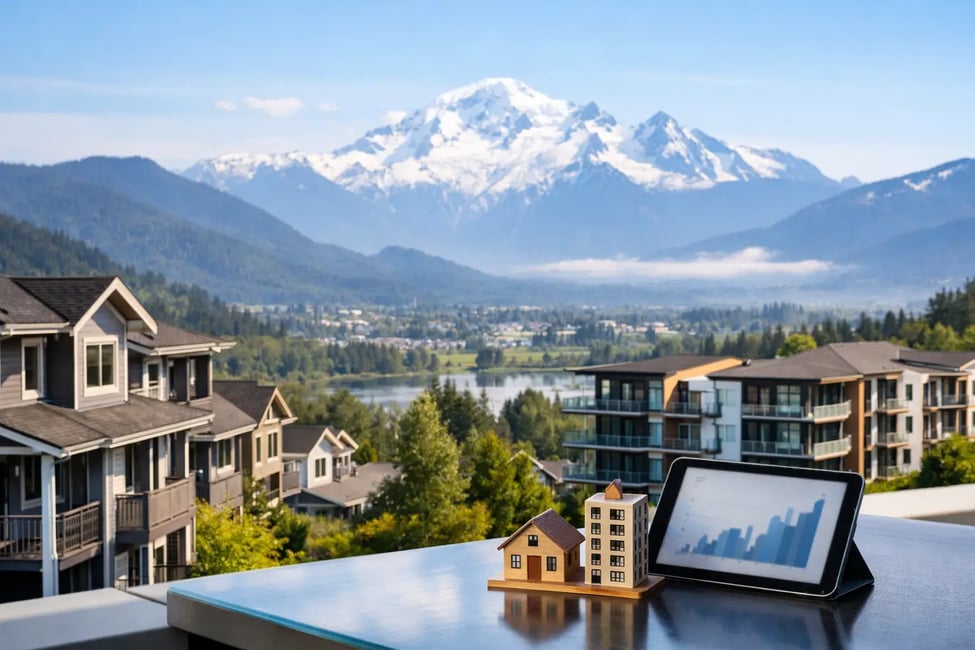
If you’ve been watching the market from Langley to Abbotsford, you’ve probably noticed the same thing I have - headlines rarely tell the full story. Fraser Valley housing trends can look soft in one neighborhood, competitive in another, and surprisingly steady just a few blocks away. That’s why broad market takes often create more confusion than clarity, especially for first-time buyers trying to figure out whether now is smart timing.
What matters more is how inventory, pricing, borrowing costs, and local demand are lining up in the communities where people actually want to live. A condo buyer in Willoughby is facing a different market than a family shopping for a detached home in Murrayville or Brookswood. The same goes for sellers. A townhouse in Walnut Grove may attract a very different buyer pool than a larger home in South Surrey or Abbotsford.
What Fraser Valley housing trends are showing right now
Across the Fraser Valley, the clearest shift has been balance. We’re no longer in the ultra-heated conditions where every listing sparks a bidding war, but we’re also not seeing a full collapse in demand. Buyers have become more selective, and sellers who price based on last year’s expectations are finding the market less forgiving.
That change matters. In a more balanced environment, homes still sell, but they sell for the right reasons - strong pricing, good presentation, and a property type that matches current demand. Buyers have a bit more room to compare options, negotiate terms, and think carefully before writing an offer. For first-time buyers, that can be a real advantage.
At the same time, affordability is still the big story. Even when prices cool or level off, monthly payments remain sensitive to interest rates. So while some buyers are seeing better selection, they’re also weighing borrowing costs more closely than they did a few years ago. That’s why activity tends to be strongest in more attainable product types like condos and townhomes, especially in high-demand areas with good commuter access.
Langley remains one of the most watched markets
If you’re buying or selling in Langley, the details matter. Willoughby continues to attract younger buyers, professionals, and families looking for newer townhomes, condos, and access to schools, parks, and commuter routes. That keeps entry-level and mid-range housing active, even when the broader market feels cautious.
Walnut Grove often draws buyers who want established neighborhoods, practical family layouts, and access to Highway 1. Murrayville has a different rhythm - often appealing to buyers who value a quieter, more mature setting. Brookswood stands apart again, especially for those looking for larger lots, detached homes, and a more suburban feel.
These micro-markets don’t move in lockstep. One part of Langley can feel competitive while another sees longer days on market. That’s why I always tell clients to stop thinking in terms of a single "Langley market" and start looking at their exact product type, price band, and neighborhood.
Buyers have more choice, but not unlimited leverage
One of the biggest misunderstandings I hear is that more listings automatically mean buyers can expect major discounts. Sometimes that’s true, but often it depends on the home. If a listing is well-priced, move-in ready, and located in a sought-after area, it can still attract strong interest quickly.
Where buyers do have more leverage is in the process. They may be able to include subjects, negotiate completion dates, ask for repairs, or avoid the pressure of making a rushed decision. That’s a healthier environment than the panic-driven market many people remember.
For first-time buyers, this is where preparation really pays off. If you understand your financing, your monthly comfort zone, and the neighborhoods that fit your lifestyle, you can act confidently when the right home comes up. The goal isn’t to time the market perfectly. It’s to make a smart purchase with a clear plan.
Pricing behavior is changing for sellers
Sellers across the Fraser Valley are still getting results, but the strategy has changed. Overpricing and hoping the market catches up is much riskier than it used to be. Buyers are comparing listings carefully, and when a property sits too long, they start asking what’s wrong with it.
That doesn’t mean sellers need to underprice. It means pricing has to reflect current competition, not peak-market memories. In neighborhoods like Willoughby or Walnut Grove, where buyers often have multiple similar listings to review, pricing precision can make a major difference in the first two weeks.
Presentation also matters more in a balanced market. Clean staging, strong photography, and thoughtful pre-listing preparation can help a home stand out when buyers have options. This is especially true for townhomes and condos, where purchasers often compare several nearly identical floor plans before deciding.
Fraser Valley housing trends by property type
Property type is shaping market behavior just as much as location.
Condos tend to be the entry point for many first-time buyers, especially in Langley and Surrey. They can offer a more manageable price point, but buyers are paying closer attention to strata fees, reserve funds, and future maintenance exposure. A lower purchase price only helps if the monthly ownership cost still fits your budget.
Townhomes remain one of the most competitive segments because they hit the sweet spot for so many households. Young families, downsizers, and move-up buyers all look at this category. In many Fraser Valley communities, townhomes offer the best compromise between space and affordability.
Detached homes are where affordability pressure is felt most sharply. Demand is still there, especially for well-located family homes, but the buyer pool narrows quickly as prices rise. That means detached sellers need to be especially realistic, while buyers in this segment often benefit from more negotiation room than they would in the townhouse market.
Interest rates still influence every decision
Even when rates hold steady, they shape behavior. Buyers tend to do one of two things: they either pause and wait for better borrowing conditions, or they adjust expectations and focus on what they can comfortably afford now.
Neither approach is automatically right or wrong. Waiting may help if rates improve and your finances are stable, but it can also mean facing more competition later if demand rebounds quickly. Buying now may let you secure a home with less pressure, but only if the payment works for your real life, not just for a lender’s approval amount.
This is where I encourage clients to think beyond purchase price. Your monthly budget, future plans, commuting costs, renovation needs, and family timeline all matter. A slightly smaller home in a stronger location can be a better long-term decision than stretching for more space in a less practical area.
What this means in Surrey, Abbotsford, and Maple Ridge
Surrey continues to show strong demand in more affordable segments, especially where transit, new development, and long-term growth support buyer confidence. Some areas attract first-time buyers looking for a foothold closer to Metro Vancouver, while others appeal to investors and move-up households.
Abbotsford often offers more space for the money, which keeps it on the radar for buyers willing to trade commute time for value. That said, affordability alone doesn’t make every purchase a good one. Neighborhood fit, resale potential, and property condition still matter.
Maple Ridge remains part of the conversation for buyers who want relative value without giving up access to amenities and community growth. As with Langley, pricing and demand can vary widely depending on the specific neighborhood and housing type.
How I’d read the market if you’re planning a move
If you’re a first-time buyer, I’d see this market as an opportunity to shop with more care than urgency. Get pre-approved, narrow your target neighborhoods, and pay attention to total monthly cost instead of chasing the absolute top of your approval range.
If you’re selling and buying, timing matters less than coordination. In a balanced market, I’d focus on protecting your downside first - making sure your sale strategy is realistic - then building a purchase plan around that.
If you’re an investor, I’d be cautious about assuming quick appreciation will do all the work. Cash flow, rental demand, holding costs, and future resale appeal deserve a harder look in this kind of market.
The biggest takeaway from current Fraser Valley housing trends is that blanket advice doesn’t help much. Real estate is local, and right now it’s hyper-local. A smart move in Willoughby may not be the right one in Brookswood, and a good condo purchase in Surrey may look very different from a detached-home strategy in Abbotsford. If you focus on your budget, your goals, and the specific neighborhood in front of you, the market becomes a lot easier to read - and a lot less intimidating.